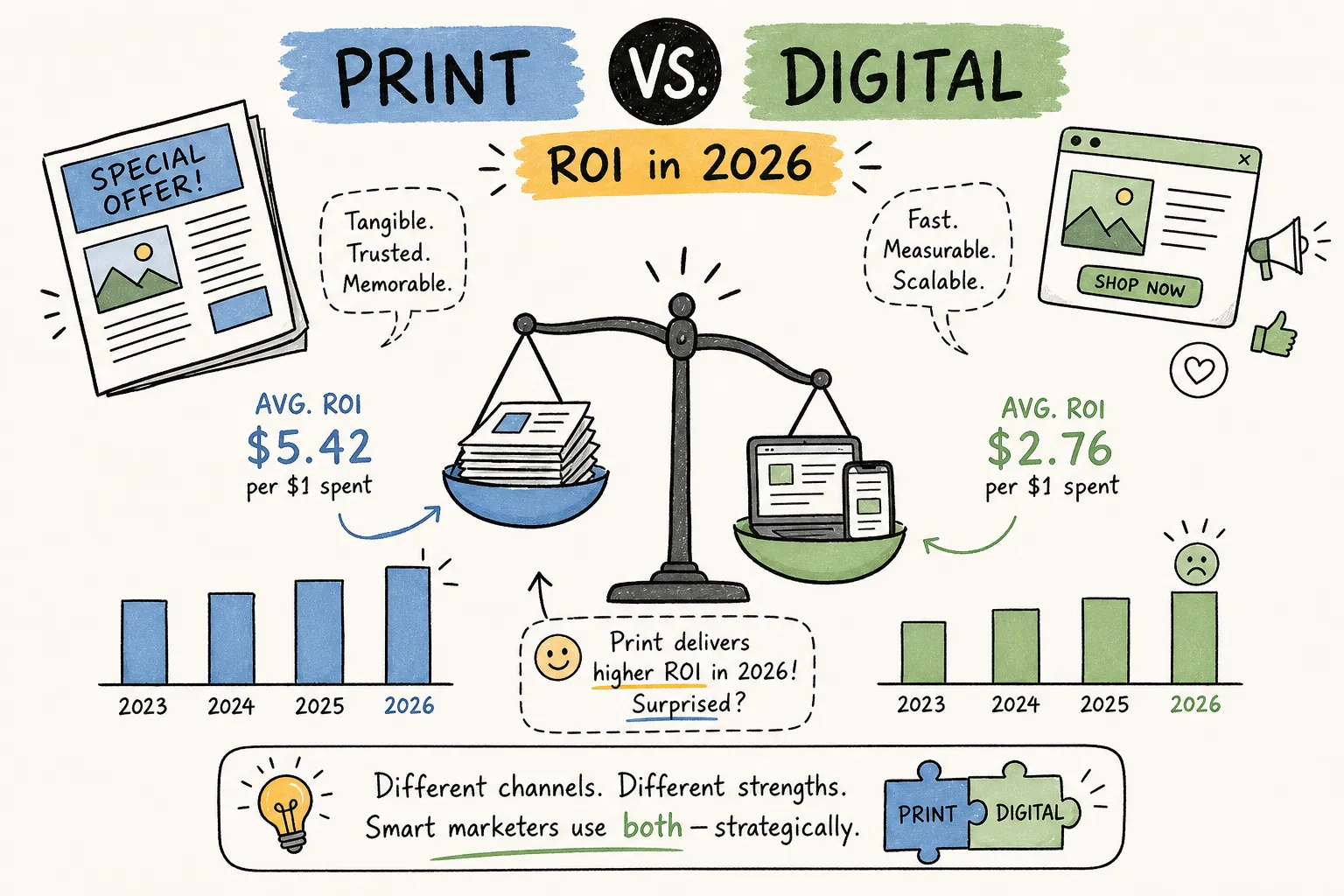
Print vs. digital marketing ROI: what 2026 data shows
Compare print vs. digital marketing ROI using 2026 benchmarks, response rates, CPA math, attribution gaps, and QR scan analytics for direct mail.
Print and digital are often measured unevenly
Digital channels usually receive cleaner dashboard credit because click and session data are built into delivery. Print needs a deliberate response layer before its ROI contribution becomes visible.
Direct mail ROI benchmarks
Digital attribution bias
Source-level QR tracking
CPA matters more than CPM for campaign decisions
Digital often wins on impression cost, but direct mail can compete on cost per acquisition when response rates, offer value, and customer quality are included.
Last-click attribution can hide print response
Mail pieces can create awareness and intent before the final conversion happens through branded search, direct traffic, or retargeting. QR scan analytics gives print a direct source-aware response signal.
The strongest strategy is print plus digital
Print can build trust and recall while digital captures and compounds the intent that print creates. SmartSqr helps measure the print side with source-level scan data.
Direct mail QR code questions
Is print marketing ROI still competitive in 2026?
Yes, benchmark research continues to show strong direct mail ROI and response rates, especially when campaigns are measured by CPA, customer quality, and source-aware attribution instead of CPM alone.
How can marketers measure print like digital?
Use campaign-linked QR codes, tracking URLs, incrementality testing, and attribution reporting that connects each scan back to the printed source, audience, offer, and destination.